 Search

Powder vs. Liquid High-Temperature Coatings: Which Is Right for Your Application?
When metal components face sustained or cyclic heat, the choice of coating can determine how long they last before corrosion, discoloration, or adhesion failure occurs. Exhaust systems, industrial silencers, burners, manifolds, and biomass equipment all rely on high temperature coatings that can perform under stress.
Choosing between a powder or liquid system is not always straightforward. Both types of heat-resistant coatings can protect steel effectively, but they differ in application, performance, and maintenance. Engineers and job shops often weigh appearance, durability, and practicality when deciding.
This guide explains the key differences between powder and liquid high temperature coatings, how each performs in demanding conditions, and when to use one over the other.
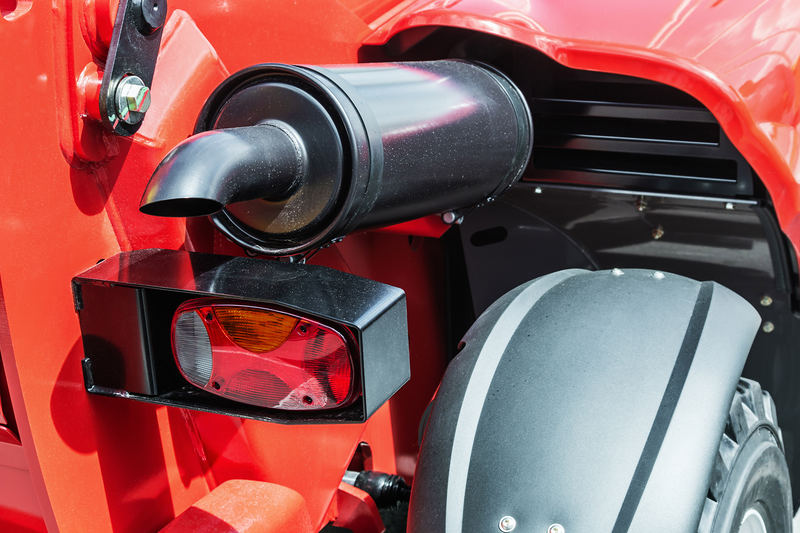
What High-Temperature Powder Coatings Offer
Powder coatings formulated for high heat environments are designed to protect components exposed to continuous temperatures from 600 °F to over 1000 °F. They form durable, crosslinked films that resist oxidation and maintain color and adhesion after repeated heating cycles. Forrest Paint’s INFERNEX® high temperature coatings are an example of powder systems built for this environment, providing long-term corrosion and UV resistance on both ferrous and non-ferrous substrates.
Key Advantages of High-Heat Powder Coatings
- Film Durability and Hardness
Powder coatings cure into a dense, uniform film that withstands abrasion and resists breakdown under thermal stress. The structure maintains hardness even after repeated heating and cooling. - Corrosion and UV Resistance
Outdoor equipment and exhaust assemblies benefit from the coating’s ability to resist salt spray, humidity, and UV degradation. High-temp powders like INFERNEX PS-1000 have been tested for both salt fog resistance and accelerated weathering to confirm their performance. - Smooth or Textured Appearance
Powder systems offer flexibility in finish, from satin to matte textures. This is especially useful for designer exhausts, visible engine components, and decorative high-heat assemblies that require appearance consistency. - Efficient and Sustainable Application
Powder overspray can often be reclaimed and reused, reducing waste and improving transfer efficiency. This makes it a cost-effective and environmentally responsible choice for production finishing lines.
Common Applications
- Exhaust systems
- Industrial silencers
- Engine parts and manifolds
- Decorative furnace or stove components
- Heat shields and mufflers
These components benefit from both protection and appearance, making powder systems a strong choice where visual quality and durability matter.
What Liquid High-Temperature Coatings Offer
Liquid coatings are often chosen when part geometry, installation constraints, or equipment availability make powder coating impractical. These systems can be applied by spray, brush, or roller and are suitable for on-site coating or repair work.
Liquid high temperature coatings for steel are also valuable when the component cannot be heated in a curing oven. They cure either through air drying followed by in-service heat exposure or with controlled bake cycles.
Key Advantages of Liquid Systems
- Flexibility for Large or Complex Assemblies
Liquid coatings can be applied to oversized equipment such as boilers, ducts, and silencers that cannot fit in powder ovens. - Easier Field Repair and Touch-Up
Unlike powders, liquid coatings can be repaired or recoated in the field, making them ideal for maintenance work or in-place installation. - Thin Film Application
Liquids can be applied at very low film builds, preventing interference on threaded fasteners or machined surfaces. - Control Over Multiple Layers
Liquid systems allow engineers to build film thickness in stages, as long as recoat intervals are properly managed.
Common Applications
- Biomass combustion chambers
- Large industrial silencers
- Boilers and furnace housings
- Heat stacks and ducts
- Field-installed exhaust systems
These systems are valued for their flexibility and ability to perform in maintenance and retrofit projects.
Surface Preparation and Curing: The Equalizer
Regardless of chemistry, both high temp powder coating and industrial liquid coating systems depend on correct surface preparation. Failure to clean or blast properly will shorten service life no matter which coating type is used.
Surface prep should follow these steps:
- Solvent cleaning to SSPC-SP1 standards to remove oils and contaminants.
- Abrasive blasting to a near-white metal finish (SSPC-SP10 / NACE 2) for exterior components.
- Target a surface profile of 0.75 to 1.5 mils for best adhesion and film performance.
Both coating types require clean, dry, and properly profiled metal to bond effectively.
Comparing Powder and Liquid Systems
Powder coatings offer performance efficiency for repeatable parts and cleanroom applications, while liquids offer real-world flexibility and field adaptability.
| Factor | Powder Coating (INFERNEX® Powder Series) | Liquid Coating (INFERNEX® Liquid Line) |
| Cure Method | Oven cure at 400 °F – 450 °F | Air dry, then heat cure or in-service cure |
| Film Thickness | Uniform 1.5 – 2.5 mils | Can be applied thinner; easier to layer |
| Application Equipment | Powder booth and electrostatic gun | Standard spray gun; no oven required |
| Overspray | Often reclaimable | Overspray is waste |
| Repair and Touch-Up | Difficult post-cure | Simple to repair or recoat |
When to Choose Each System
Choose Powder When:
- The part can be blasted, coated, and oven-cured
- Consistent finish and color are important
- High production efficiency is needed
- Corrosion or UV exposure is a concern
- The component requires a tough, high heat powder coat finish
Examples: OEM exhaust systems, aftermarket mufflers, or industrial silencers in production batches.
Choose Liquid When:
- The component is too large for a curing oven
- The coating must be applied after installation
- Touch-ups or field repairs will be required
- Complex shapes or heat-sensitive components make powder impractical
Examples: Biomass boilers, heat stacks, or industrial silencers assembled on site.
Summary: Matching the Coating to the Application
Powder and liquid high temperature coatings both serve vital roles in protecting steel exposed to heat. The best system depends on project scale, surface geometry, cure capability, and aesthetic requirements.
- Powder coatings deliver a consistent, durable film with superior weathering resistance and efficiency in high-volume operations.
- Liquid coatings provide versatility for field work, repairs, and oversized components that cannot be oven-cured.
In both cases, the fundamentals remain the same: clean metal, proper surface profile, correct film build, and full cure are the foundation for long-term performance.
When selecting a high-heat coating, Forrest Paint’s INFERNEX® line offers proven powder and liquid systems that meet demanding service conditions for exhaust systems, industrial equipment, and heat-exposed steel.
Explore Forrest Paint’s INFERNEX® high temperature coating solutions to find the right combination of appearance, durability, and efficiency for your application.